Offshore Oil & Gas Equipment Procurement: Where Delays Actually Happen
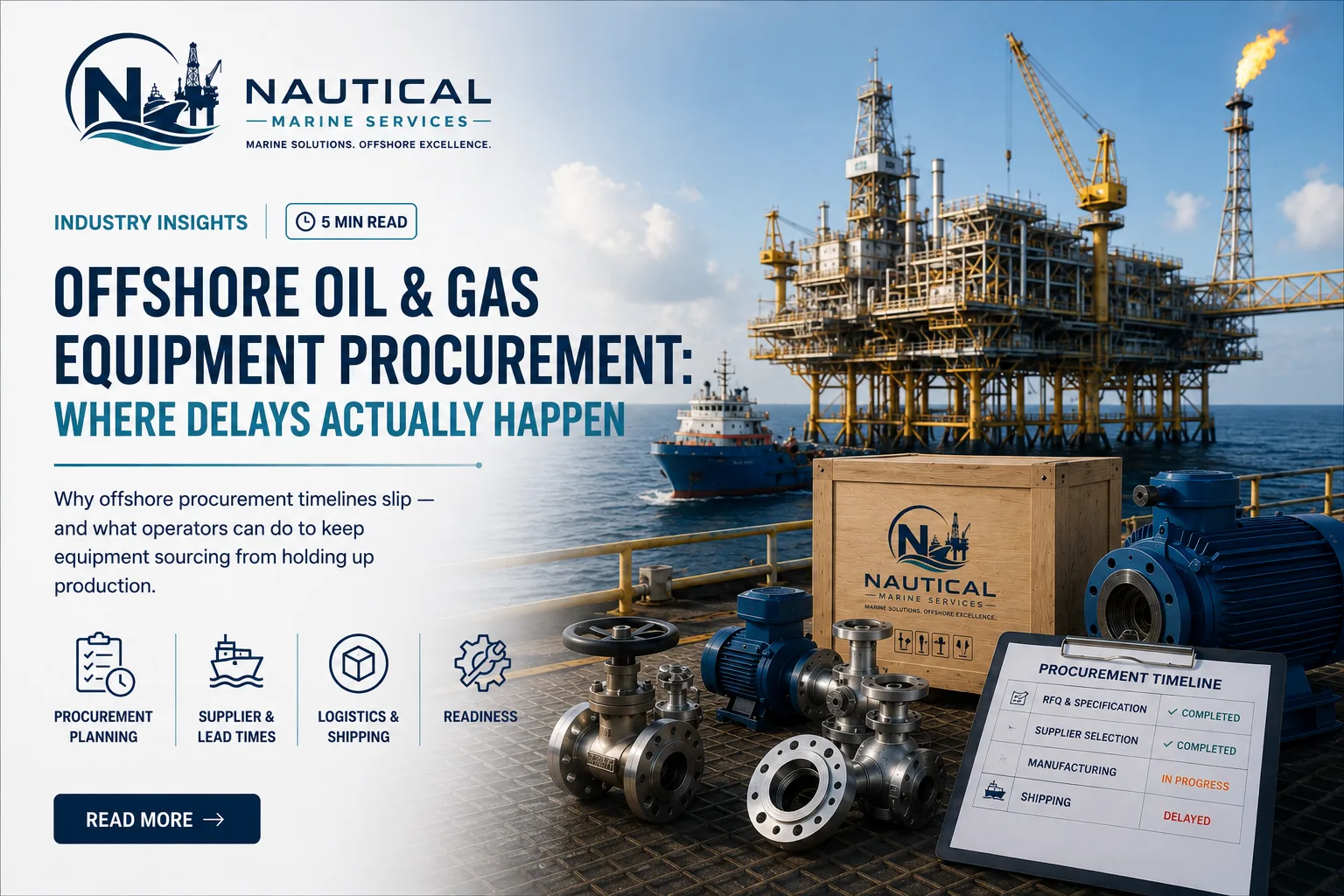
A platform rarely loses production time because a component is unavailable somewhere in the world. It loses time because that component wasn't identified, cleared and delivered quickly enough to match the pace of the operation waiting on it.
Offshore oil and gas work runs on carefully sequenced calendars — drilling programs, planned maintenance windows, and production targets are all mapped against fixed dates, with every piece of equipment expected to show up exactly on that timeline. In practice, procurement is the stage where that plan most often starts to unravel.
Where Offshore Procurement Timelines Slip
Vendor qualification takes longer than the schedule allows
Bringing on a new supplier for a specialized component often involves qualification steps that take weeks. When a requirement surfaces close to a planned operation, there's rarely enough runway left to onboard a new vendor in time.
Weather and vessel logistics add unpredictable time
Getting equipment from shore to an offshore platform depends on vessel availability and weather windows that operators don't control. A part that's ready onshore can still sit waiting for the next viable transfer opportunity.
Spot purchasing under pressure
When a requirement is identified late, procurement teams are often forced into spot-market purchasing — sourcing from whoever can deliver fastest, rather than the supplier that would have been chosen with more lead time.
Multiple stakeholders, multiple approval steps
Offshore procurement usually involves engineering sign-off, budget approval, and logistics coordination across different teams. Each additional step adds time between identifying a need and getting equipment moving.
Offshore procurement rarely fails on the equipment itself — it fails on the coordination between sourcing, logistics, and the operational schedule that's waiting on it.
What Keeps Production On Schedule
Operators who avoid these delays tend to treat procurement as part of operational planning, not a separate function that catches up after the schedule is already set. That means flagging likely equipment needs early, working with suppliers who can move quickly without needing a lengthy qualification process, and building logistics lead time into the plan rather than assuming vessel transfers will happen on demand.
It also means having a sourcing partner who understands offshore logistics — one who can coordinate delivery to a platform or supply base, not just to a port.